
Each time we are surprised by the collapse of a seasoned entrepreneur’s fortune, or astonished by the success of someone with limited resources, we are quick to attribute the outcome to luck, intelligence, or circumstance. Yet such explanations, though convenient, overlook a deeper truth: money is not managed by numbers alone; it is managed by the human being behind them. Financial decisions do not emerge from a cold, isolated mental space. Rather, they are formed at the intersection of personal experience, psychological makeup, emotional memory, and the self-image one carries about oneself and the world.
Behavioral economics has demonstrated that individuals do not make financial decisions based purely on mathematical logic. Instead, decisions are shaped by a complex network of emotions, cognitive biases, and early-life experiences. Someone raised in an environment of scarcity may treat money as psychological compensation, overspending when given the opportunity. Another may cling to excessive saving out of fear of losing security. In both cases, financial behavior reflects not income level, but personal patterning.
Recurring debt, an irrational fear of investment, or reckless business expansion are rarely mere calculation errors; they are often outward manifestations of an internal psychological structure that has yet to be understood.
Here lies the importance of recognizing differences in professional roles without falling into the trap of comparison. Entrepreneurship is not heroism; it is a daily test of psychological resilience—the ability to endure uncertainty, volatility, and loss. In the financial world, loss is not an anomaly but part of the natural cycle. Those lacking sufficient inner flexibility may collapse at the first setback. Conversely, an employee operating within a stable structure should not be reduced to the stereotype of someone merely seeking safety. When aligned with the nature of the role, such an individual may be indispensable to institutional sustainability. The issue is not whether one is an entrepreneur or an employee, but whether one is placed in an environment that aligns with one’s psychological constitution.
When individuals move from stability into the realm of profit and loss, deeper layers of personality emerge. Profit reveals not only the ability to earn, but the discipline to resist the illusion of unchecked expansion. Loss, meanwhile, exposes more than financial damage; it reveals how one interprets adversity. Is it viewed as a temporary lesson or as a harsh verdict on one’s self-worth? Those who equate failure with personal value suffer twice. Those who separate outcomes from identity preserve the capacity to begin again.
Within institutions, as in life, diversity in personality patterns is not a challenge to be forcibly unified, but a form of wealth to be wisely managed. The analytical personality evaluates risk. The creative personality generates ideas. The executive personality transforms vision into reality. The supportive personality safeguards the human balance within the team. When a single mold is imposed on all, talent is squandered. When differences are acknowledged and harmonized, both financial and managerial sustainability are strengthened.
At its core, money remains a mirror. It does not merely amplify what we possess; it amplifies who we are. Those lacking self-awareness may repeat their mistakes with larger tools. Those who understand their patterns and recognize their roots can engage with money as an instrument rather than a master. Between legitimate ambition and measured aspiration, between contentment and stagnation, lies a subtle path mastered only by those who mature inwardly before they expand financially.
Ultimately, money is not solely a test of numerical intelligence; it is a test of human maturity. The more self-aware an individual becomes, the more balanced their decisions grow, the calmer their relationship with wealth, and the wiser their ambition. At that point, the question is no longer how much we own, but how we own it, why we pursue it, and with what spirit we manage what lies in our hands.
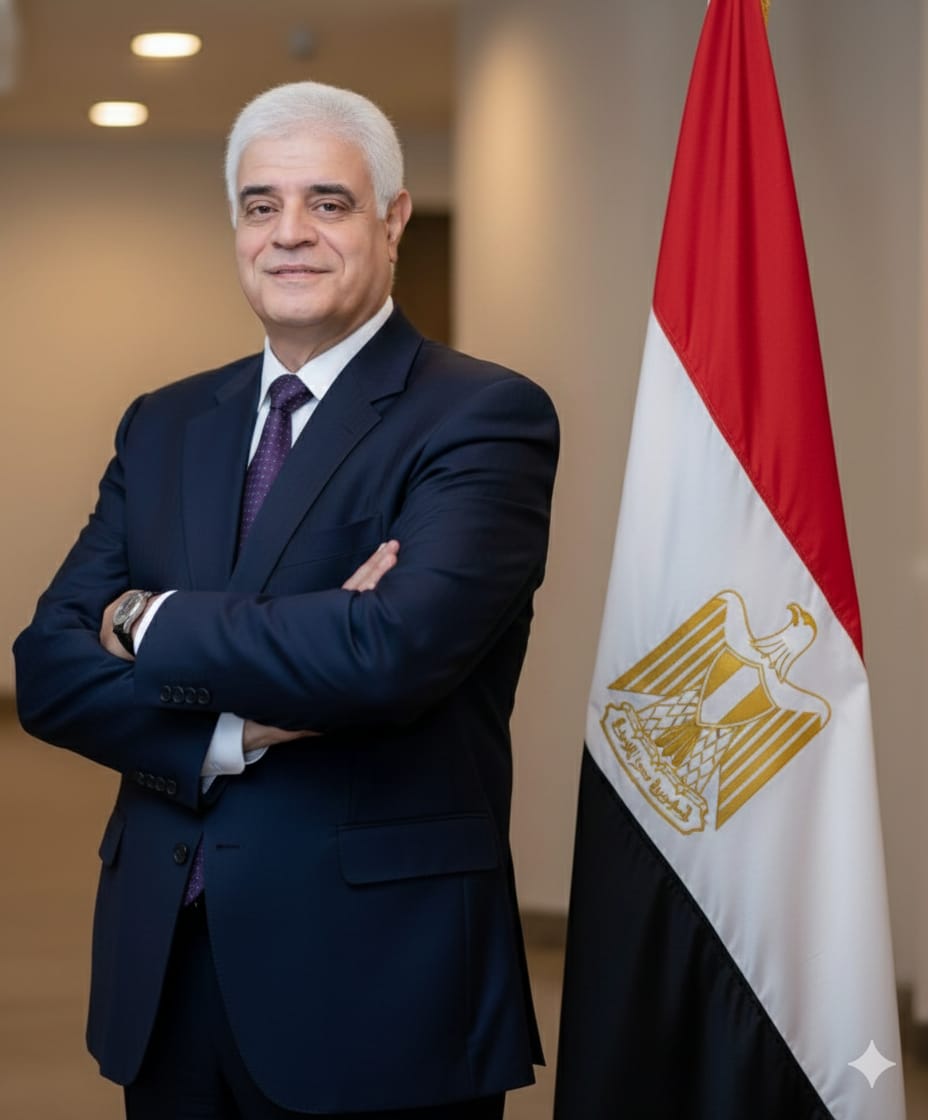
Dr. Ibrahim Fawaz Al-Khader
Founder and CEO of Knoz Academy
Writer and Researcher in Financial Awareness and Sustainable Income Development

 (
( (
(